21 cloths, each with its own character: from denim to cashmere flannel, from mountaineer corduroy to Milano-stitch jersey. Below, the close-ups taken on location.
Thecloths
Denim
Black denim · Grey denim
Denim taken away from blue. In black it reads sharp and composed, close to a tailored trouser; in grey it softens into a mineral tone that sits easily with knitwear and suede. The same cloth, two different moods.
The classic, handled with restraint. The deep blue is dense and even, a denim that looks right under a jacket; the mid blue is lighter and easier, closer to the jeans you reach for every weekend. Both follow the clean, straight line of the cut.
Denim as it leaves the loom: deep indigo, unwashed, still holding all its colour. Cashmere woven into the cotton softens the hand from the very first wear, without taking away the character of a raw cloth. With time and washing the indigo will lighten along the creases and the edges, and the trousers and overshirt will become entirely personal: a denim that keeps travelling with the one who wears it.
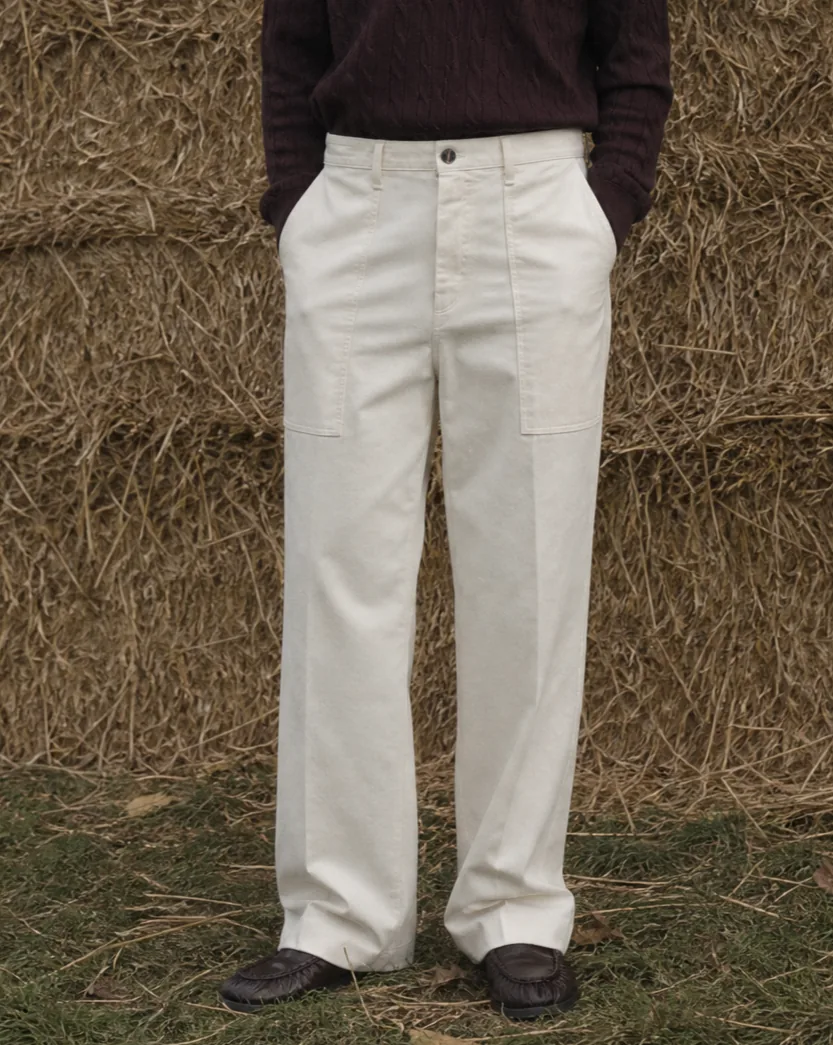
Denim's sturdier cousin: a dense, full-bodied twill with workwear roots, here in a pale, milky tone. It holds the line of a wide trouser with authority and grows softer as it is worn, without ever losing its character.
A tight, steep diagonal twill gives gabardine its smooth face and crisp hand. The quiet all-rounder of the collection: neat enough for the office, easy enough for a weekend away, with a clean line from waist to hem.
Cotton gives it structure, silk gives it light. The satin weave makes the surface smooth and faintly lustrous, so the colour shifts as you move: deeper in shadow, warmer where the light falls. A five-pocket with the manners of evening wear.
Cotton and silk satin, washed until its shine turns soft. The washing takes the polish off the surface and leaves a muted, lived-in lustre, a supple hand and a fluid fall that follows the body. Generous shapes keep their volume without stiffness: on a baggy trouser or a loose overshirt it reads relaxed and quietly refined, as if it had already been on a long journey.
Three fibres, combed together. Wool brings structure and warmth, cotton a dry, easy hand, cashmere a softness you notice first at the wrist. Combing aligns the fibres into a compact, even yarn, so the cloth keeps a clean surface while revealing a fine tonal texture up close. Cut as both a tailored trouser and a zip hoodie, it makes a complete set that moves easily between tailoring and ease.
Flannel, rethought in cotton. Brushed until the surface turns soft and slightly hazy, it keeps all the comfort of a flannel with a lighter, drier hand, while cashmere adds warmth and a gentle give. In heathered grey it reads like a classic and wears like something easier: as natural on a pleated trouser as on a zip jacket.
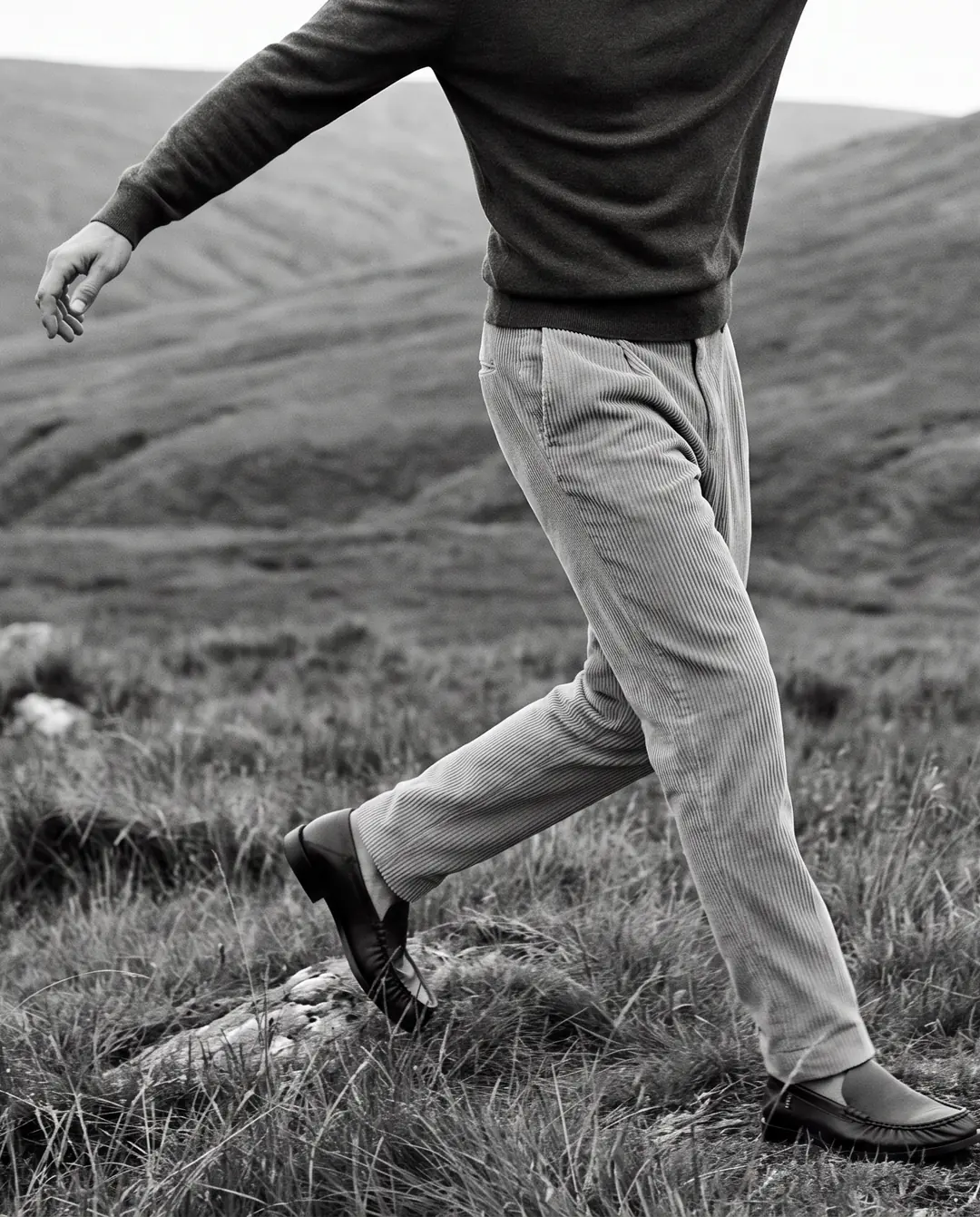
Its Italian name, rocciatore, recalls the climbers who made it their own. A broad, pronounced rib you can feel under your fingertips, given rhythm and depth by the French wale. A trouser with real presence, made for cold air and long walks.
The opposite of the mountaineer's cord: a rib so fine it almost disappears, leaving a soft, velvety surface with a gentle sheen. It takes colour beautifully, from earthy brown to dusty pink, and keeps even a generous leg fluid and polished.
Flannel in its purest expression: wool milled and brushed until the surface turns soft and matte, with a colour that looks almost powdered. No pattern, no distraction, just the depth of the cloth. The foundation of any cold-weather wardrobe.
The warmth of a classic flannel, crossed by a subtle diagonal. The line catches the light and adds a quiet sense of movement: the grey turns more vivid, the surface more interesting to the eye. For those who find plain flannel a little too plain.
Flannel, raised by cashmere. It brings a deeper softness and a rich, almost velvety hand, while the wool keeps the cloth honest and structured. It runs through the collection in different moods, from grey and taupe to dark brown and black: the one to choose when comfort and refinement must go together.
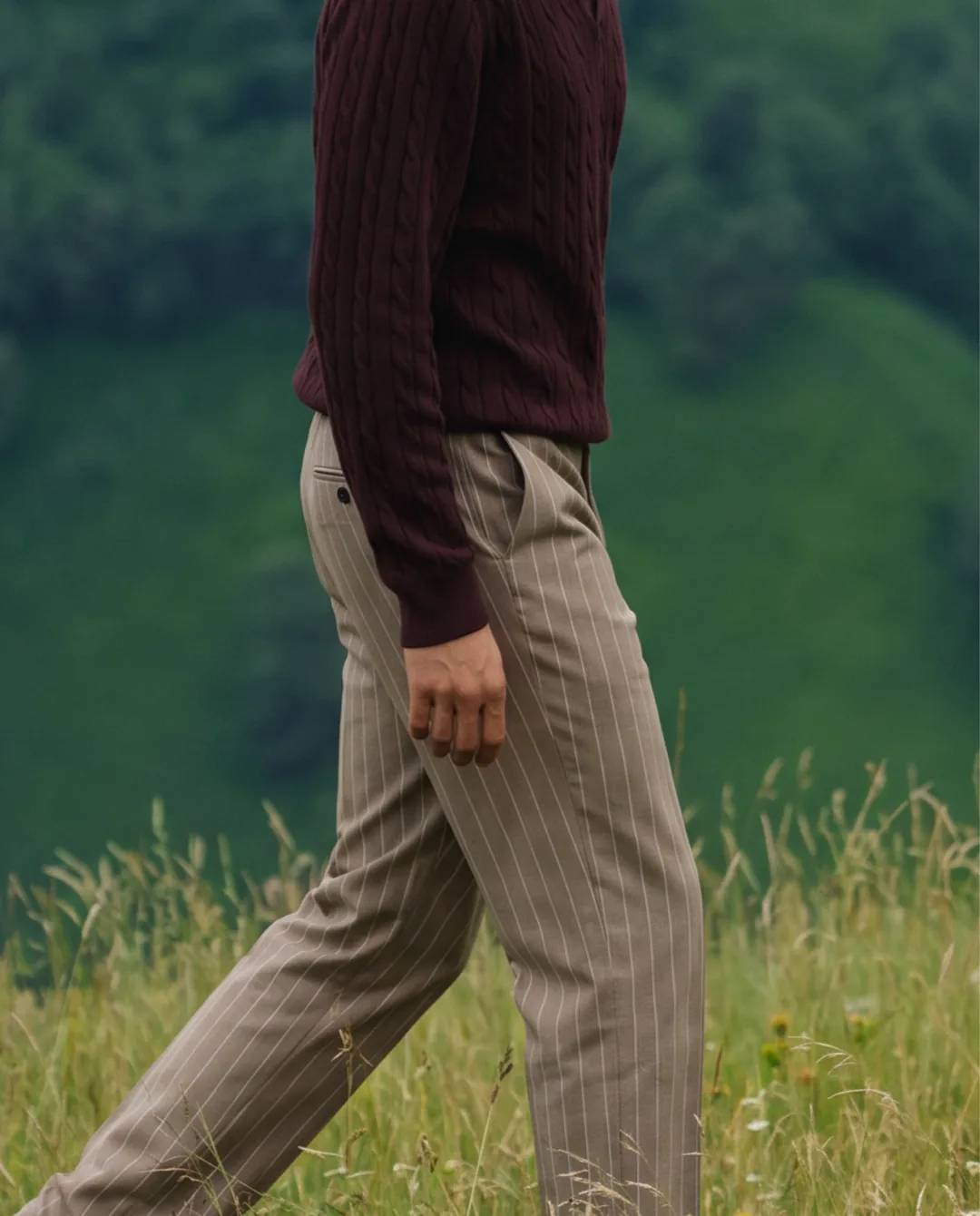
A fine merino marked by a thin stripe that runs the full length of the leg. The line lengthens the silhouette and gives it a precise, almost architectural rhythm: on beige it feels light and relaxed, on navy it carries the authority of a city suit.
The most understated of the checks. The pattern is small and tonal, almost hidden in a dark, heathered wool, and reveals itself only up close. Deep in colour and rich in texture, it has the soul of a country tweed and the discipline of a city trouser.
A check from the classic tailoring repertoire, redrawn in grey: fine lines crossed by a lighter overcheck, elegant from a distance and graphic up close. On a drawstring trouser it becomes a well-judged contradiction; on a wide tailored leg, pure classic.
The boldest check in the collection. A larger, more open pattern where deep navy meets warm brown, with the confident scale of a tartan. It gives the wide trouser a strong, graphic presence: wear it with plain knitwear and let the cloth do the talking.
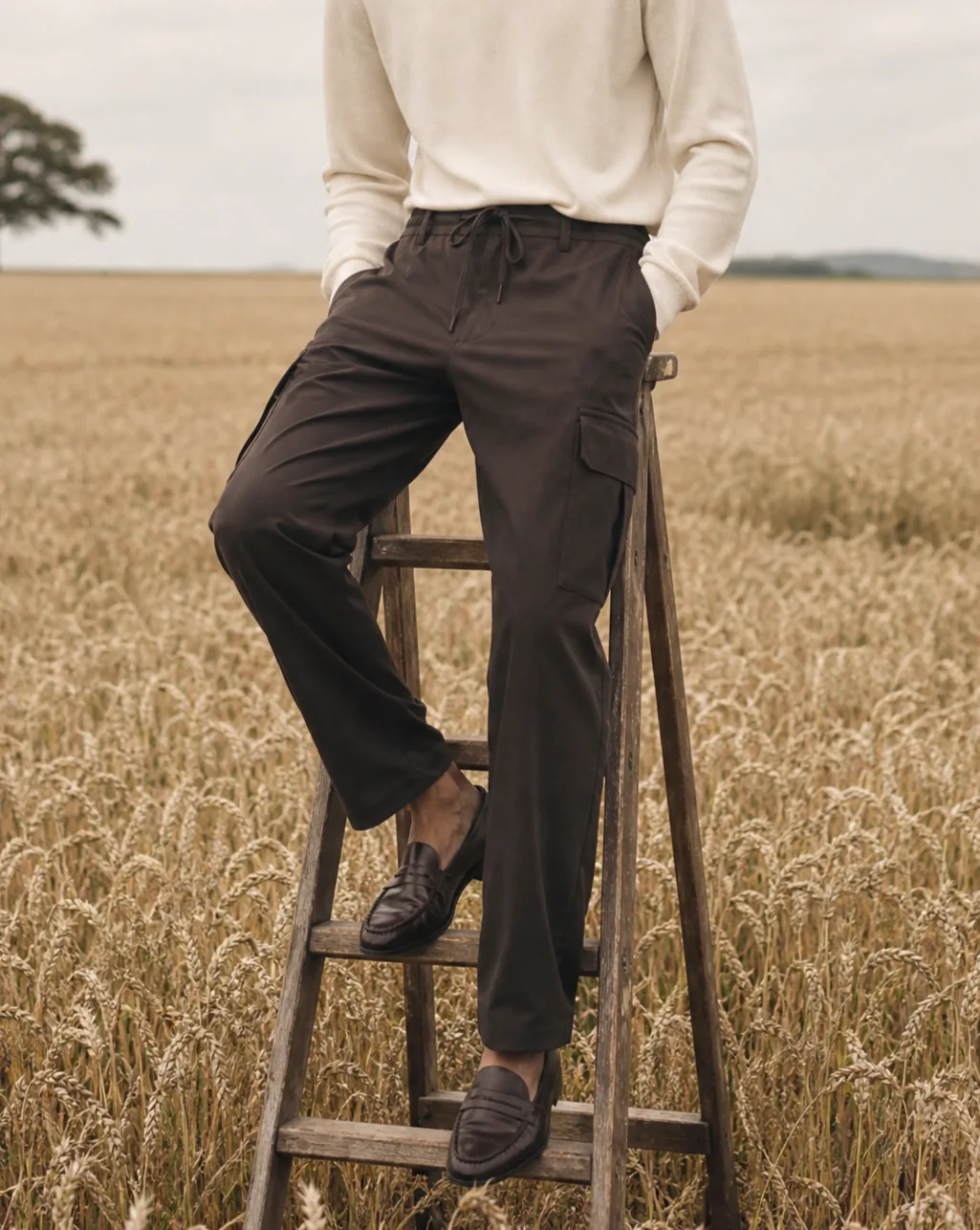
Merino with a technical temperament. Fine and clean-surfaced, it keeps what makes merino special, softness, breathability and a natural drape, inside a more contemporary cloth. A bridge between tailoring and utility, as much at home on a wide trouser as on a cargo.
Comfort, raised a level. A double-faced fleece enriched with cashmere: soft on both sides, full in the hand, luxurious without announcing it. It takes the drawstring trouser well beyond the walls of home.
Punto Milano is the most structured of knits: a compact double stitch that behaves almost like a woven cloth, with a smooth, clean face. It moves with the body yet holds a precise silhouette. The drawstring trouser at its most composed.